
Circulation Pump
Qingzhou Baimu Machinery Co., Ltd.
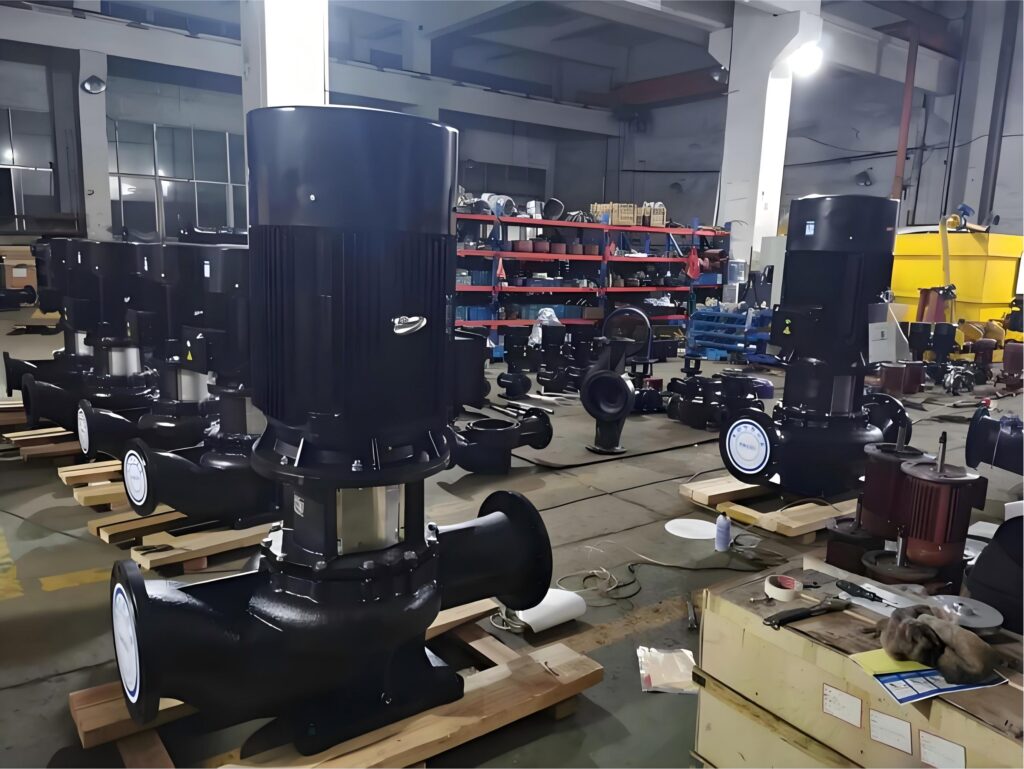
Add Your Tooltip Text Here
Circulation Pump Introduction
The circulation pump is the core power unit in water treatment and aquaculture systems—ensuring continuous water flow for stable water quality and even oxygen distribution.
1. Material
- Pump housing: Cast iron (epoxy-coated) or 304/316 stainless steel—corrosion-resistant;
- Impeller: Engineering plastic (e.g., PP), bronze, or stainless steel—wear and cavitation resistant;
- Mechanical seal: Silicon carbide/graphite or ceramic—long-lasting and leak-proof.
2. Available Types
- Flow rate: 5 – 500 m³/h;
- Head: 3 – 30 meters;
- Port size: DN40 – DN200 (flanged or threaded);
- Suitable for: Clean water, slightly solids-laden aquaculture water, or recirculated water.
3. Key Specifications
- Motor power: 0.75 kW – 30 kW;
- Voltage: 380V / 50Hz (3-phase);
- Protection rating: IP55 (dust and water spray resistant);
- Insulation class: Class F (high-temperature resistant).
4. Typical Dimensions (e.g., 20 m³/h, 10 m head)
- Overall size (L×W×H): approx. 500 mm × 300 mm × 400 mm;
- Inlet/outlet diameter: DN50 (2″);
- Mounting hole spacing: approx. 200 mm × 150 mm;
- Weight: 15–25 kg (depending on material).
5. Installation
Mount the pump on a solid, level base or frame to minimize vibration. Support inlet/outlet pipes independently—do not let pipe weight rest on the pump. Before first start-up, fill the pump with water (except self-priming models) and verify rotation direction per arrow on housing. Install a strainer at the inlet to prevent debris from damaging the impeller.