
Farm Boiler
Qingzhou Baimu Machinery Co., Ltd.
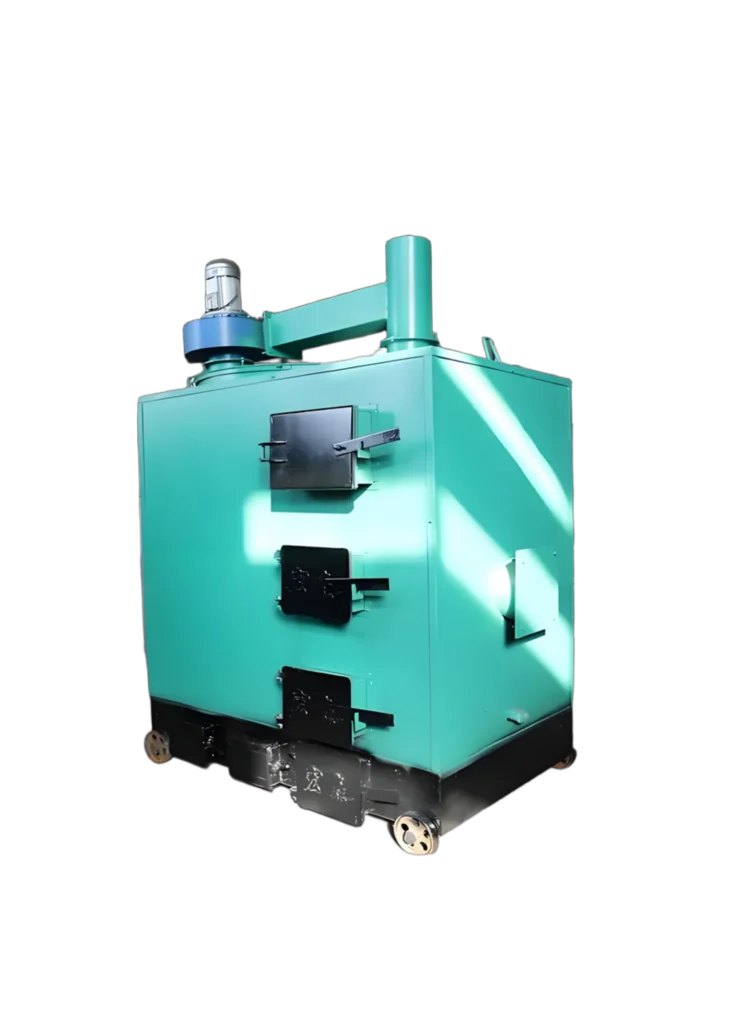
Add Your Tooltip Text Here
Farm Boiler Introduction
The farm boiler provides reliable heat—ensuring young animals survive winter and reducing cold stress. It’s essential for large-scale pig and poultry farms during cold seasons.
1. Material
- Boiler body: High-quality carbon steel (Q235B) or stainless steel, with anti-corrosion lining;
- Insulation: High-density rock wool or ceramic fiber, 50–80 mm thick;
- Outer casing: Color-coated steel or stainless steel—rust-resistant and neat.
2. Available Types
- Thermal output: 30 kW, 50 kW, 100 kW, 200 kW, 350 kW;
- Fuel type: Biomass pellets, coal, or gas (optional);
- Heating area: One unit heats 500–3500 m² (depending on barn insulation).
3. Key Specifications
- Operating pressure: Atmospheric (<0.1 MPa)—no special equipment registration required;
- Outlet water temperature: 40–85°C (adjustable);
- Thermal efficiency: ≥75% (biomass models);
- Control: Automatic temperature control + timer.
4. Typical Dimensions (e.g., 100 kW biomass boiler)
- Overall size (L×W×H): approx. 1500 mm × 900 mm × 1600 mm;
- Flue outlet: Φ150–200 mm (top or rear);
- Water inlet/outlet: DN50–DN80 (flanged or threaded);
- Weight: 400–600 kg.
5. Installation
Install in a dedicated boiler room or well-ventilated area away from flammables. Place on a level concrete base. Connect heating pipes (PPR or galvanized steel recommended). Vent flue vertically outdoors—at least 1 meter above roof ridge. Fill with water before first use, purge air, and test controls. Clean ash and slag regularly to maintain efficiency.