
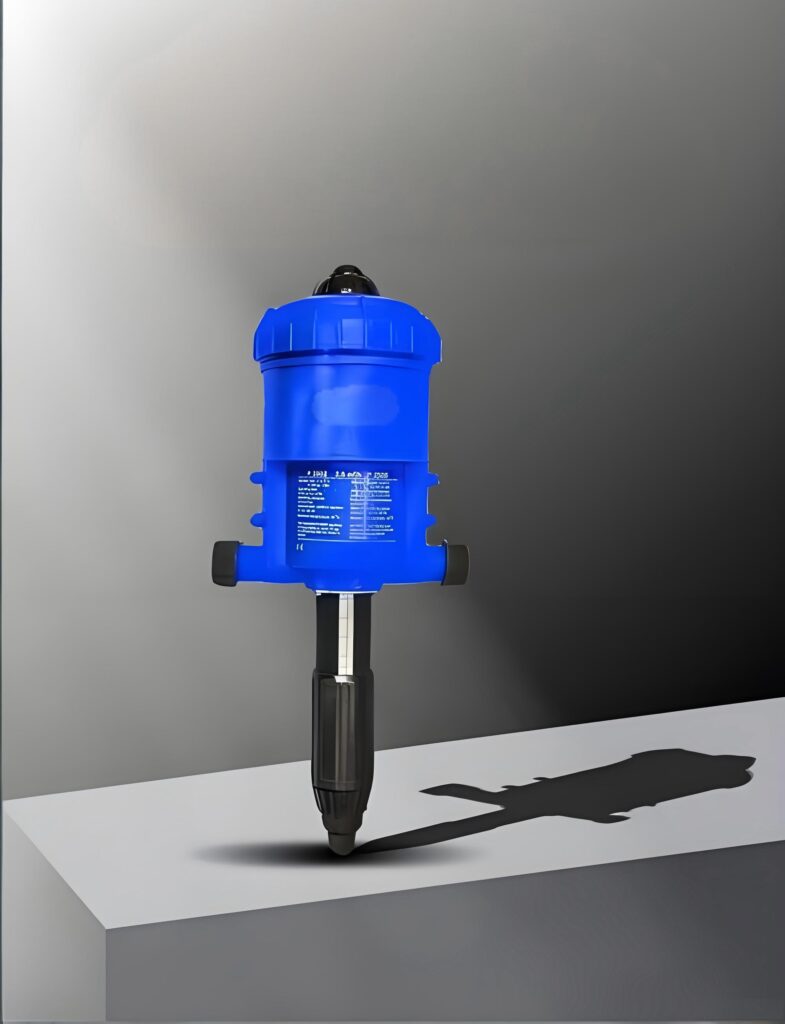
Water Line Dosing Pump / Medication Injector
Qingzhou Baimu Machinery Co., Ltd.
Add Your Tooltip Text Here
Water Line Dosing Pump / Medication Injector Introduction
The water line doser enables accurate and uniform medication delivery—saving labor and improving disease prevention. It’s a standard tool for modern livestock and poultry farms.
1. Material
- Pump body & fluid path: Food-grade PVC, PP, or PVDF—acid/alkali resistant;
- Seals: EPDM or Viton rubber—compatible with various medications;
- Housing (if any): Engineering plastic or stainless steel—moisture-resistant and durable.
2. Available Types
- Dosing ratio: 1:100, 1:200, 1:500, 1:1000 (adjustable or fixed);
- Flow range: 0.5–50 L/min (suits small to large farms);
- Types: Venturi injector (no power), piston pump, or diaphragm metering pump (electric).
3. Key Specifications
- Operating water pressure (Venturi): 0.2–0.6 MPa;
- Dosing accuracy: ±5% (higher for metering pumps);
- Power: None required (Venturi) or 220V (electric models);
- Compatible with: Antibiotics, electrolytes, organic acids, vaccine diluents, etc.
4. Typical Dimensions (e.g., 1:100 Venturi model)
- Body length: approx. 120–180 mm;
- Inlet/outlet: DN20 (3/4″) or DN25 (1″) male thread;
- Suction port: Φ6–10 mm quick-connect fitting;
- Weight: 200–400 g.
5. Installation
Install the doser in-line on the pressurized main water line. Connect inlet to water source, outlet to drinker lines, and suction tube into medication tank (tank level must be below the doser). Before first use, purge air from the system and set the mixing ratio. Flush with clean water after use to prevent clogging or residue buildup.