
Dairy Barn Scraper Manure Removal System
Qingzhou Baimu Machinery Co., Ltd.
Add Your Tooltip Text Here
Dairy Barn Scraper Manure Removal System Introduction
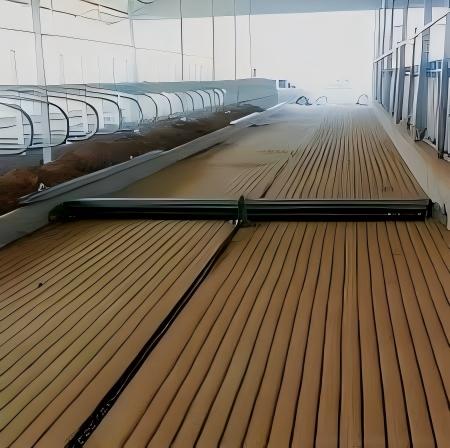
The barn scraper enables automatic manure removal—reducing labor, lowering ammonia levels, and keeping the barn clean and dry. It’s a standard system in modern dairy farms.
1. Material
- Scraper blade: Made of high-strength HDPE plastic or hot-dip galvanized steel—wear-resistant, corrosion-proof, and floor-friendly;
- Chain/cable: Galvanized alloy steel chain or stainless steel rope with high tensile strength;
- Frame & drive unit: Galvanized or stainless steel, suitable for humid, corrosive barn environments.
2. Available Types
- By operation: Reciprocating (back-and-forth) or continuous loop system;
- By lane count: Single-lane, dual-lane, or multi-lane synchronized control;
- Suitable for: Tie-stall, freestall, and milking parlors.
3. Key Specifications
- Motor power: 0.75 kW–2.2 kW (selected by lane length and load);
- Travel speed: approx. 1–3 meters per minute;
- Control modes: Timer auto / manual / remote;
- Manure removal efficiency per cycle: ≥95%.
4. Typical Dimensions
- Scraper width: 800–1200 mm (customized to manure gutter width);
- Scraper height: 200–300 mm;
- Guide rail spacing: standard 1.0–1.5 m (adjustable);
- Max travel distance: 60–100 meters per motor unit.
5. Installation
Install guide rails or brackets along both sides of the manure gutter. Mount the drive unit at one end of the gutter, then thread the chain or cable through and connect to the scraper. Ensure the blade contacts the floor smoothly without jamming. After wiring power, set cleaning schedules via control box (e.g., 3–6 times/day). Check travel direction and limit switches on first run.