
Chicken Coop Cages
Qingzhou Baimu Machinery Co., Ltd.
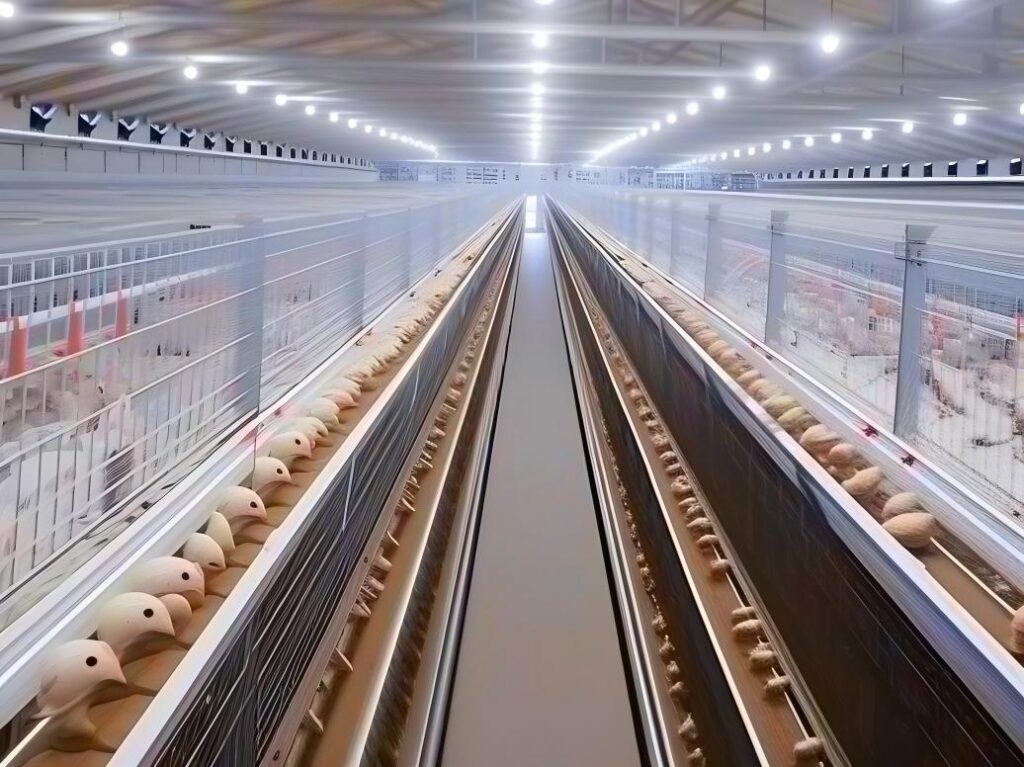
Detailed Introduction to Chicken Coops
Broiler cages are used for intensive, large-scale broiler production, effectively maximizing barn space utilization and facilitating centralized feeding, watering, and manure removal—significantly improving management efficiency and biosecurity.
1.Material
The main body of the cage is made of hot-dip galvanized low-carbon steel wire, which is rust-resistant and corrosion-resistant, suitable for the humid environment of chicken houses. The bottom net is designed in a wavy shape to help feces slide off automatically. The side nets and the front door are welded with thicker steel wire, making them sturdy and durable. All connecting parts (such as bolts and clasps) are mostly made of stainless steel or high-strength plastic, which are not prone to rust.
2.Specification types
(1) According to the number of layers: there are single-layer, double-layer and triple-layer cages, and the double-layer is the most commonly used;
(2) According to the purpose: small-hole dense net cages are used for the brooding period, and standard meat chicken cages are used for the rearing period up to the sale. Main parameters
3.Main parameters
Each chicken coop occupies an area of no less than 0.06 square meters; the net height inside the coop is approximately 380–420 millimeters; the bottom net has strong load-bearing capacity and can withstand more than 50 kilograms per square meter; the entire coop set has a service life of generally over 10 years.
4.Common dimensions
Each individual coop compartment is typically 600 millimeters long × 600 millimeters wide × 400 millimeters high, capable of housing 8–10 chickens. The length of the entire set of coops is usually 1200 millimeters, 1500 millimeters, or 1800 millimeters, and the width is approximately 600–650 millimeters. Double-layer coops have a total height of about 1600 millimeters, and triple-layer ones about 2300 millimeters.
5.Installation method
Before installation, ensure the ground is flat and hardened. First, fix the upright posts, then install the crossbeams, and then sequentially install the bottom net, side nets, and the front door. The coops are connected by clips or bolts, ensuring overall stability. When installing, note that the bottom net should have a slight slope (3°–5°) towards the direction of manure removal. The accompanying water dispenser, feeding trough, and manure removal system should be arranged simultaneously.
6. Other Notes
The cage is designed in a modular manner, which facilitates transportation, assembly and subsequent maintenance. The quick-installation structure or intelligent equipment interface can be selected according to the size of the chicken coop and the degree of automation.